Delayed egress access control for a memory care senior living center
A senior living community with a dedicated memory care wing needed a way to keep residents living with Alzheimer's and dementia safe from unsupervised wandering, without turning their building into a locked box that trapped anyone in a real emergency. That's a narrow, specialized corner of access control called delayed egress, and it has to be engineered exactly right.
The problem: keeping residents in without locking anyone in
Memory care residents living with Alzheimer's or other forms of dementia can wander, and an exterior door that opens the instant it's pushed is a real safety gap. Staff can't watch every door every minute, and a resident who slips outside unnoticed is a genuine emergency. The community needed a way to slow down and flag any exit attempt at their memory care doors, and give staff time to intervene, without creating a locked facility that couldn't be evacuated in a real emergency.
This isn't a problem unique to senior living. Retailers use the same category of device on emergency exits to deter theft out the back door. The life-safety stakes here were higher, which meant the engineering had to be exact, not just installed to code, but installed with full understanding of why every safeguard exists.
What delayed egress actually does
A delayed egress door looks like a normal exit, but pushing the hardware doesn't release the lock right away. Instead, it triggers a loud, local alarm and starts a delay, typically 15 to 30 seconds, before the door actually unlocks. That short window is the entire point: it's enough time for staff to hear the alarm, get a notification, and reach the door before a resident wanders out unsupervised, while still guaranteeing the door releases and the person can exit on their own if no one gets there in time.
For this project, every delayed egress door was tied into the facility's notification system so that an exit attempt doesn't just sound an alarm at the door, it also alerts staff and on-site security directly, wherever they are in the building.
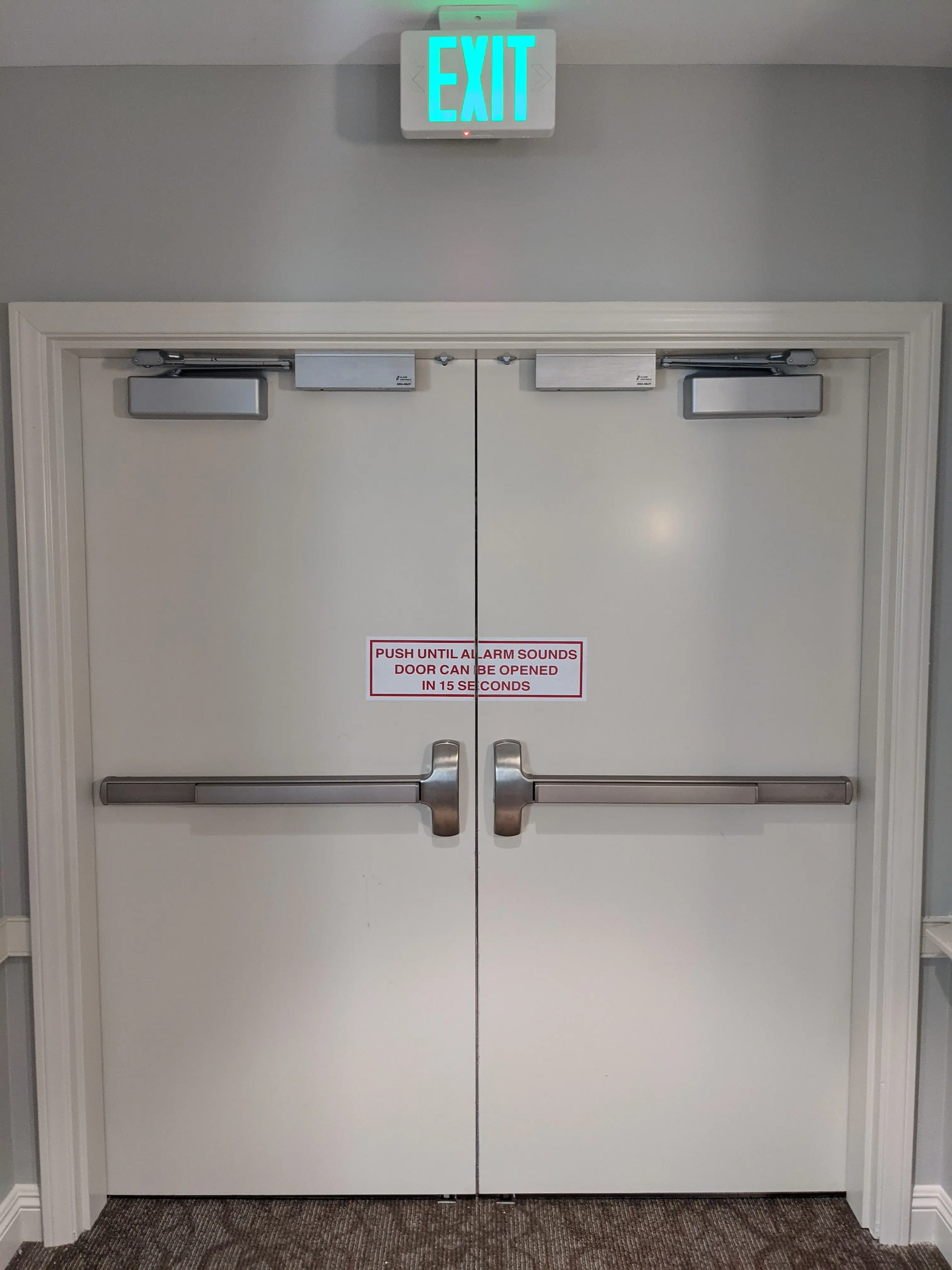
A delayed egress exit at a senior living community: the panic bar releases the door after a 15-second alarm delay, giving staff time to respond before a resident wanders out unsupervised.
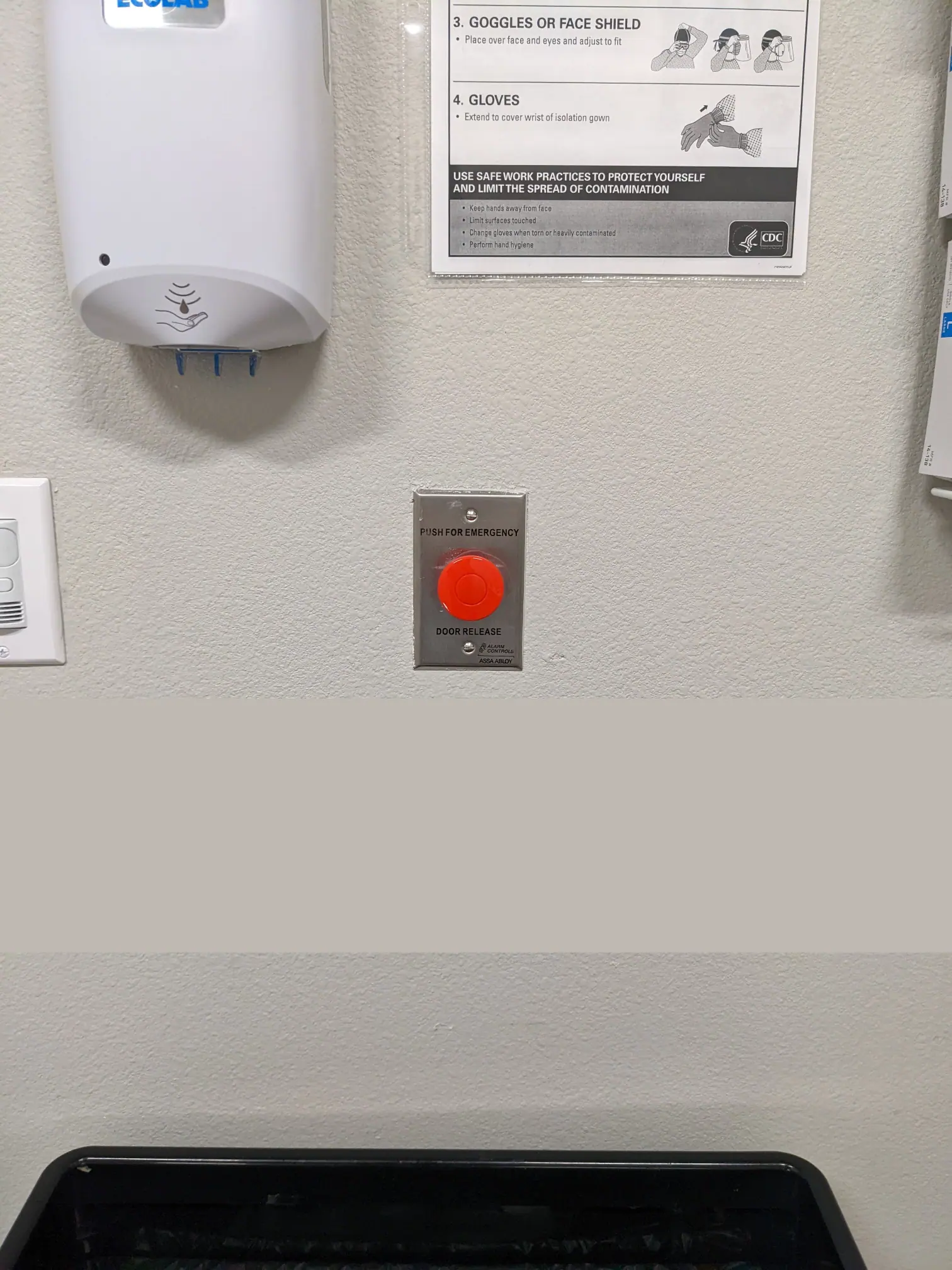
A staff-accessible emergency door release button, labeled "Push for Emergency" — pressing it releases the door instantly, no waiting on the timed delay.
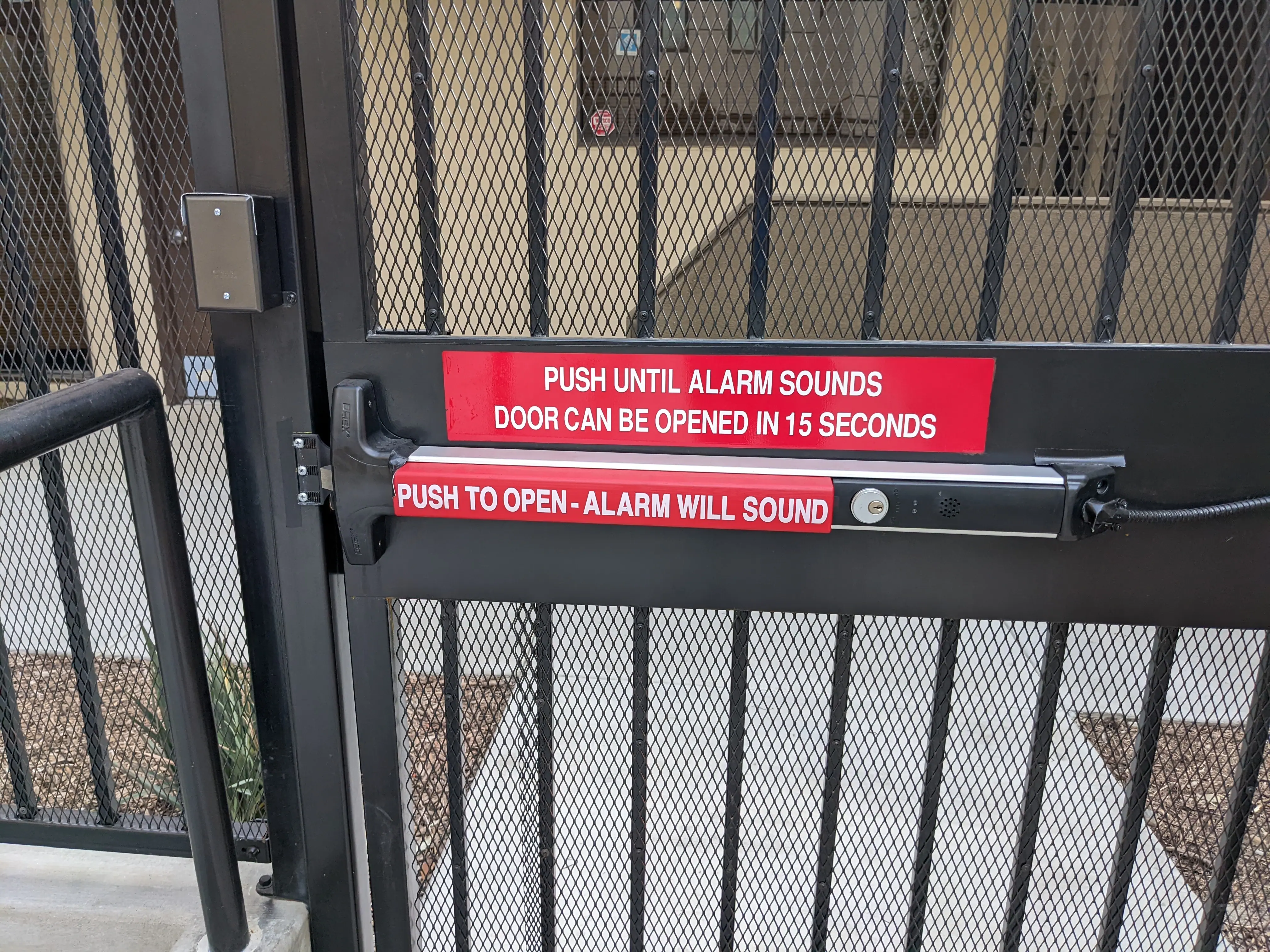
The same delayed egress principle applied to an exterior gate, keeping a courtyard secure while still guaranteeing a compliant path of egress.
Why this is one of the least forgiving categories in access control
Most access control work is about keeping the wrong people out. Delayed egress inverts that: it's about slowing down the right people leaving, on a door that must still function as a life-safety exit under every emergency scenario, an active shooter, an earthquake, a gas leak, a fire. Get it wrong and you either fail the resident, or you fail the entire building during an emergency evacuation. There's no acceptable middle ground, which is exactly why fire and life safety code treats these installations with so much scrutiny.
That's the standard we design to on every delayed egress job. The fire alarm system has to unlock every delayed egress door the instant it activates, full stop, no delay, no exceptions. Emergency release buttons have to be reachable and obvious at every door. And the whole system has to fail safe: if power is lost, the doors release, they never fail locked.
Working with the AHJ from day one
Delayed egress devices are life safety equipment, which means they don't get installed and forgotten about, they get plan checked and approved by the local Authority Having Jurisdiction before and after installation. We submitted the delayed egress plan alongside the fire alarm interconnection details for this project so the AHJ could confirm the release timing, signage, and fire alarm override before a single device went on a door, and inspected the completed work before sign-off.
That's the same standard we hold every delayed egress installation to, memory care community or big-box retailer. Life safety compliance isn't optional paperwork to us, it's the reason the system is allowed to exist on that door at all.
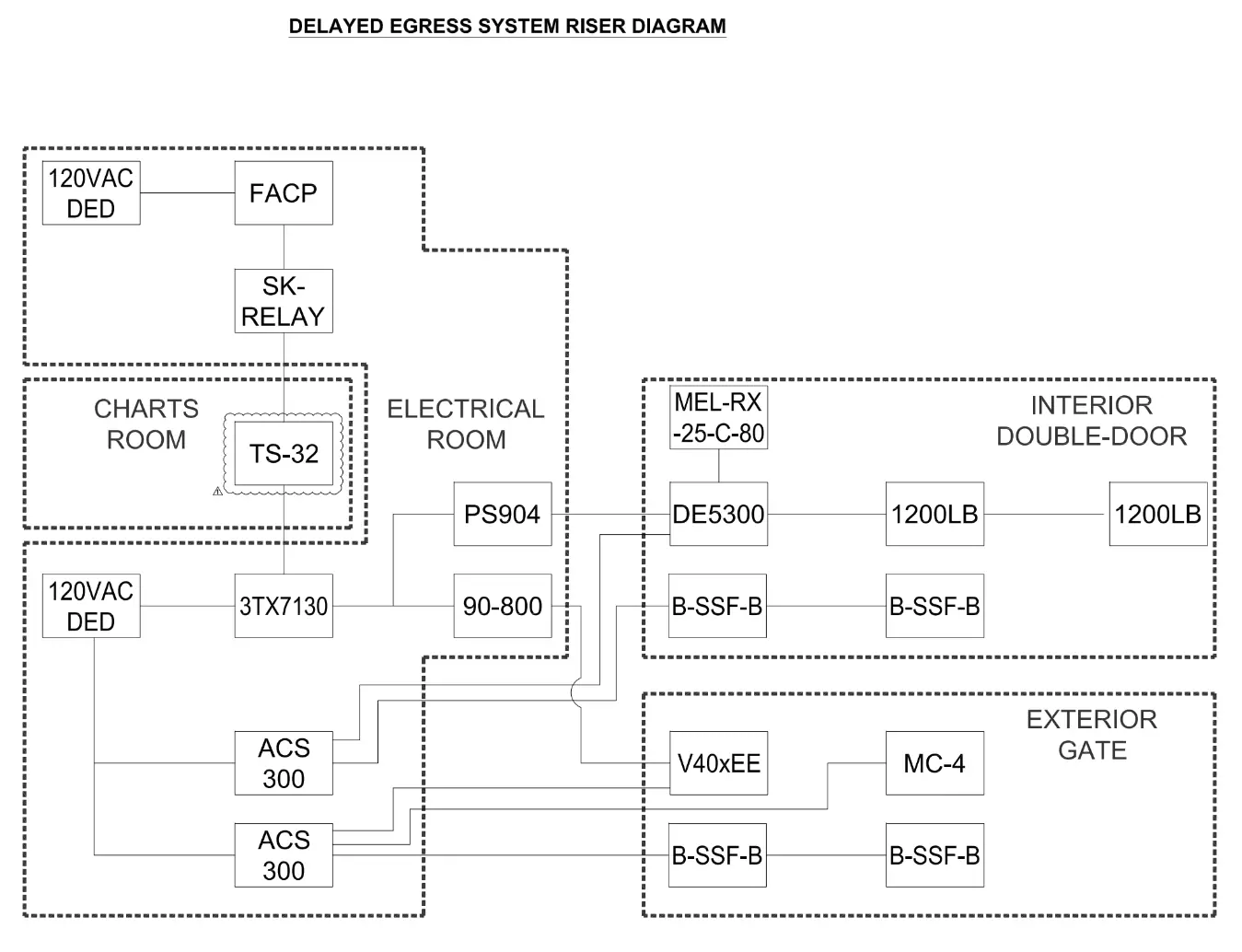
The engineered riser diagram from this project's plan set, showing the fire alarm interconnection into the delayed egress relay and the locking hardware at each door, exactly what the AHJ reviewed and approved before installation.
Considering delayed egress for your facility?
Whether you're protecting memory care residents from unsupervised wandering or securing a retail exit against theft, delayed egress has to be engineered around life safety first, compliance second, and everything else after that. We plan check every delayed egress device with the local AHJ and verify the fire alarm interconnection and failsafe release before we ever call a job finished. Life safety is our number one priority on every one of these installs, not an afterthought.