DVR, NVR, and wireless cameras: what's the actual difference?
Not all cameras are built the same way, and the underlying technology matters more than the price tag. Here's how the three main camera technologies actually work, and why we install one of them almost exclusively.
DVR (analog): the older technology
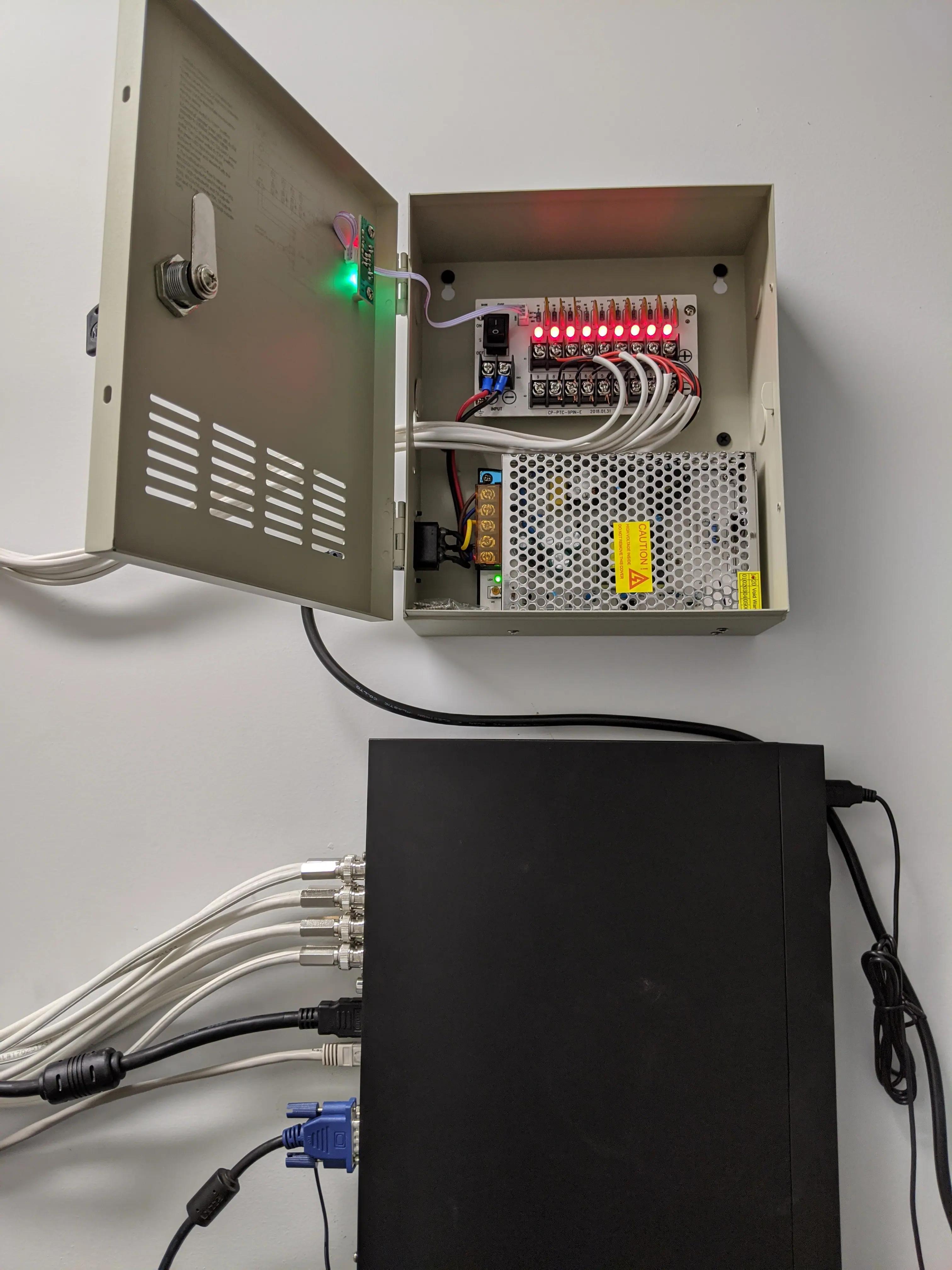
A DVR (Digital Video Recorder) system runs on analog cameras that transmit a raw video signal over coaxial cable back to a central recorder, which is what actually digitizes and stores the footage. The cameras themselves do very little processing on their own — nearly all the intelligence lives in the recorder, not the camera.
Because the signal is an analog waveform traveling down a cable, it's inherently more susceptible to electrical interference, signal degradation over distance, and power fluctuations. In practice, that shows up as pixelation, rolling lines across the image, color shifting, or a signal that simply degrades over a long cable run — problems you rarely see with a properly installed digital system. Analog cameras also lack the on-board processing that modern cameras rely on, so features like active deterrence lighting, on-camera AI object detection, or smart motion filtering are largely out of reach.
NVR (IP cameras): the current standard
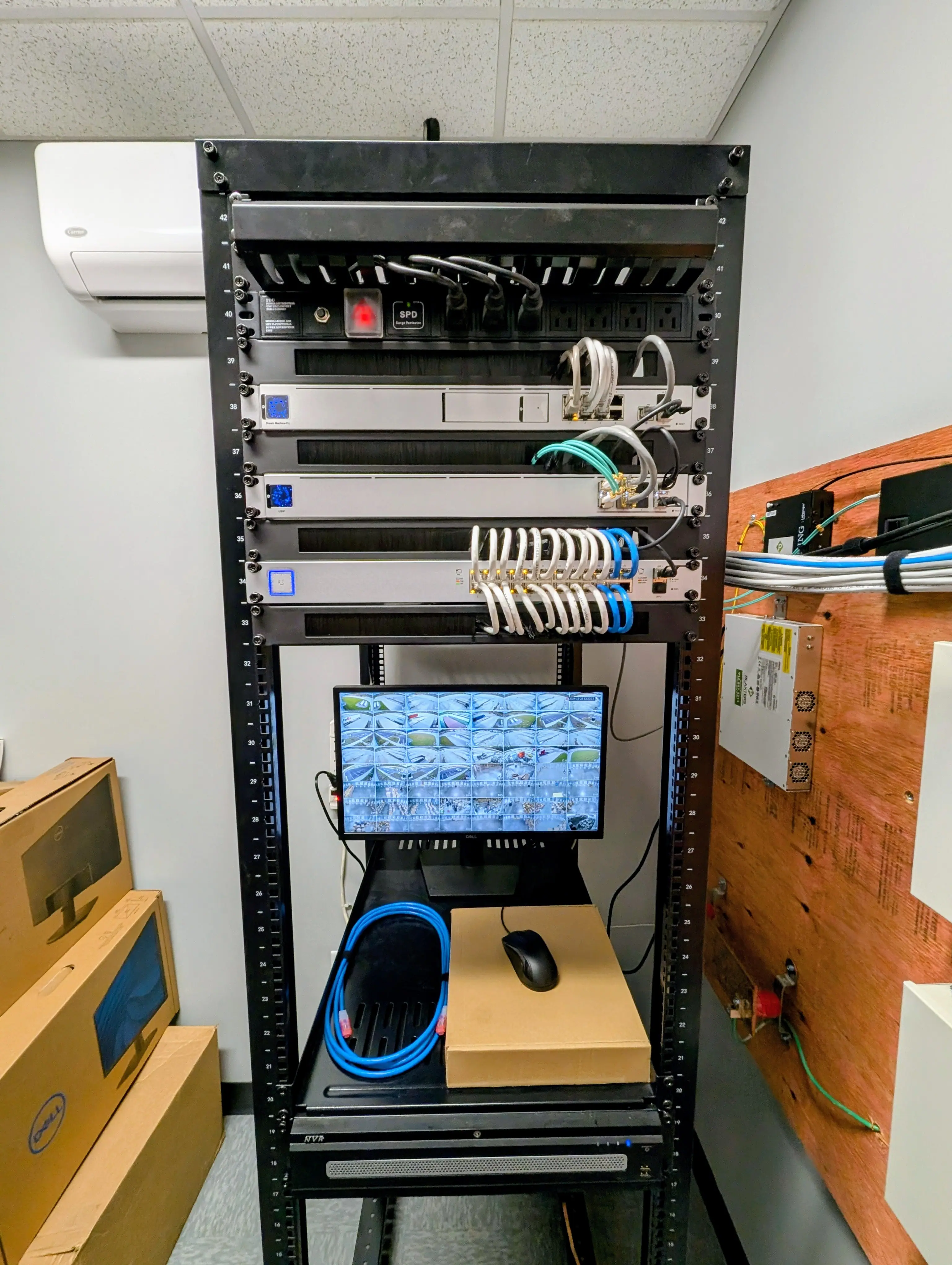
An NVR (Network Video Recorder) system runs on IP cameras — each camera captures, compresses, and encodes its own video digitally, then sends that finished digital stream to the recorder over a standard network (Ethernet) cable. Because the camera does its own processing before the signal ever leaves it, there's no analog waveform to degrade in transit.
In practical terms, that means an IP camera either works cleanly or it doesn't — there's no in-between of pixelation or rolling interference lines the way there is with analog. It's also why modern camera features exist almost exclusively on IP systems: on-board AI processing for object and person detection, active deterrence lighting and audio, and higher resolutions that hold up when you actually zoom into a face or license plate. This is the technology we install for the overwhelming majority of new systems today.
Do you still support DVR systems?
We don't install new DVR systems, since NVR technology is simply the better tool for the job today. That said, if you already have an existing DVR system that needs maintenance, camera replacement, or a small expansion, we'll absolutely still support it — you don't need to rip out a working system just because the technology has moved on. When it does eventually make sense to upgrade, we'll walk you through what that looks like.
Wireless cameras: fine for a quick DIY setup, not for a real system
Standalone wireless cameras — the kind sold as consumer DIY kits — are a different category entirely, and we don't install them as part of our systems. They're built for convenience, not for the kind of long-term reliability a real security system needs.
The "wireless" in wireless cameras only ever refers to the data connection — power is still a real, physical requirement. That means you're either running power cable to the camera anyway (at which point you've lost most of the convenience of going wireless), or relying on a small solar panel and battery, which introduces its own reliability problems in low-light seasons or shaded mounting locations.
Then there's the connectivity itself: a wireless camera has to stay within range of a strong WiFi signal to function at all, which adds yet another point of failure between the camera and your recorded footage. And that point of failure isn't just theoretical. WiFi signal jammers have become an increasingly common tool among more sophisticated burglars specifically because they know a wireless camera, and a wireless alarm system, can be knocked offline with a single cheap device. A hardwired IP camera system, running on physical Ethernet cable back to an on-site recorder, simply has nothing for a WiFi jammer to defeat.
We've seen this play out firsthand with real customers. A property owner installs a handful of wireless cameras, feels confident their property is covered, and moves on. Then a burglary happens, they go to pull the footage, and there's nothing there — the WiFi was jammed the moment the burglars arrived, and the cameras simply stopped recording. What's worse is that the owner didn't know they were unprotected until it was too late; the cameras had given them a false sense of security the entire time. In more than one of these cases, the only footage that ended up helping at all was captured by a neighbor's camera, not their own. That's not a security system — that's hoping someone else's camera does the job yours couldn't.
The bottom line
For new installations, we build on IP/NVR technology because it's more reliable, supports the features that actually matter for security, and isn't vulnerable to the interference and signal issues that come with analog or standalone wireless cameras. If you already have a working DVR system, we'll keep it running for as long as it makes sense — no pressure to rip it out before you're ready.